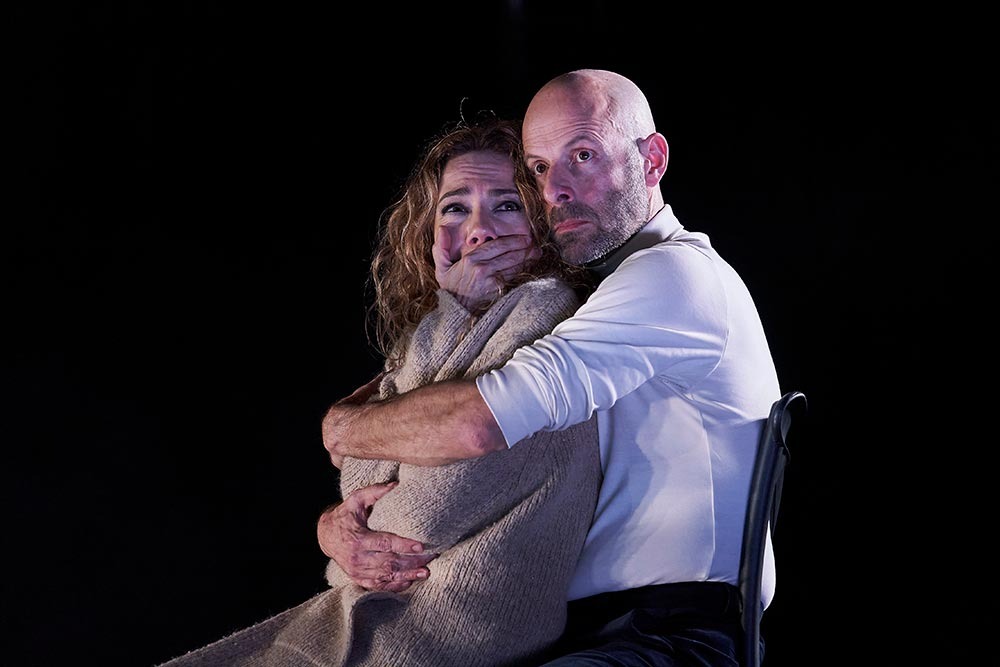
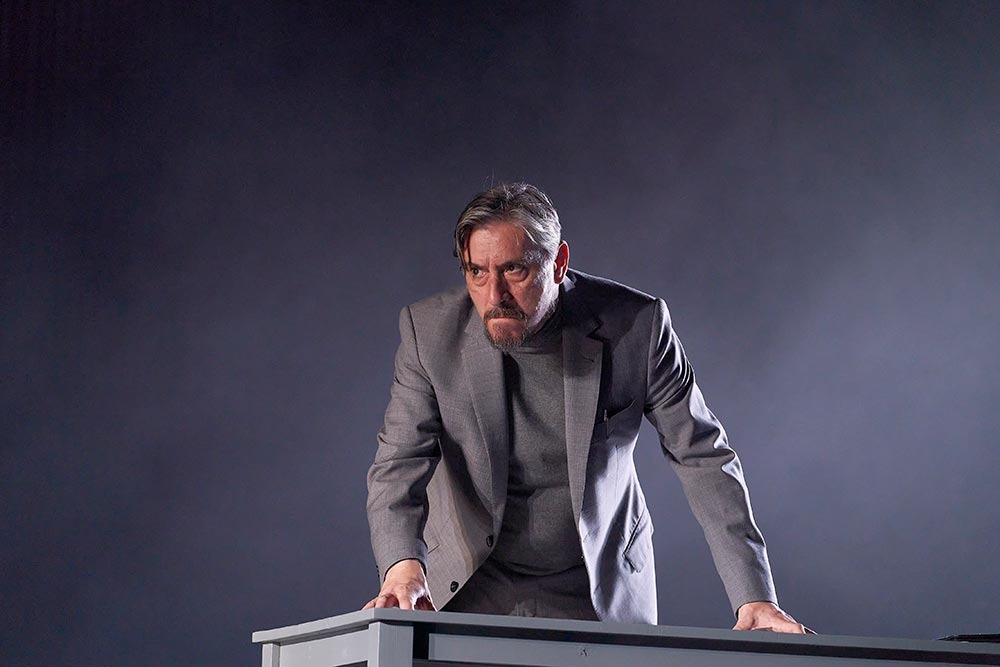
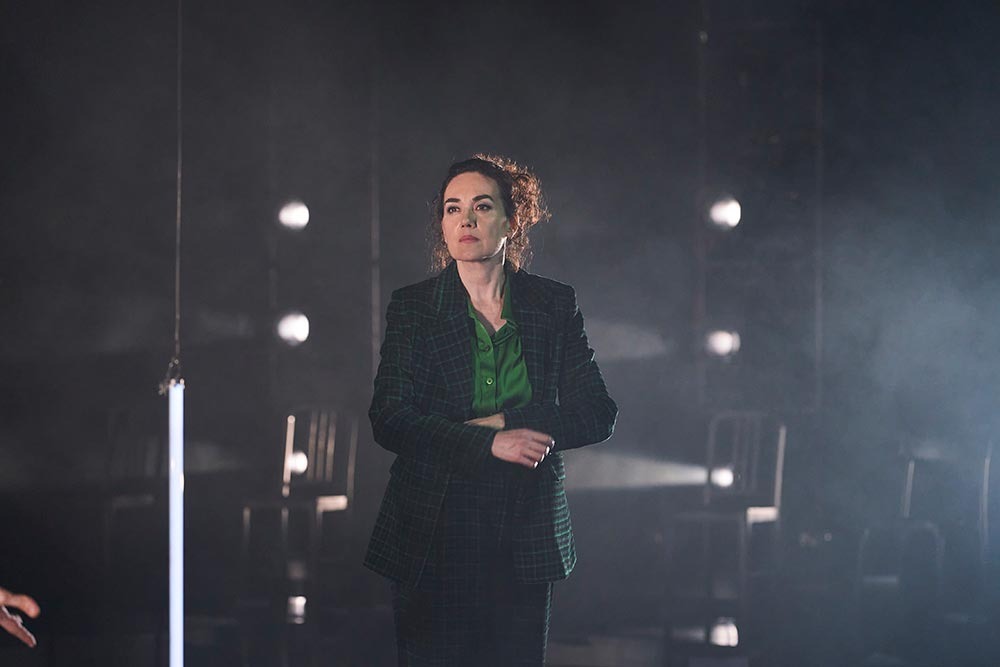
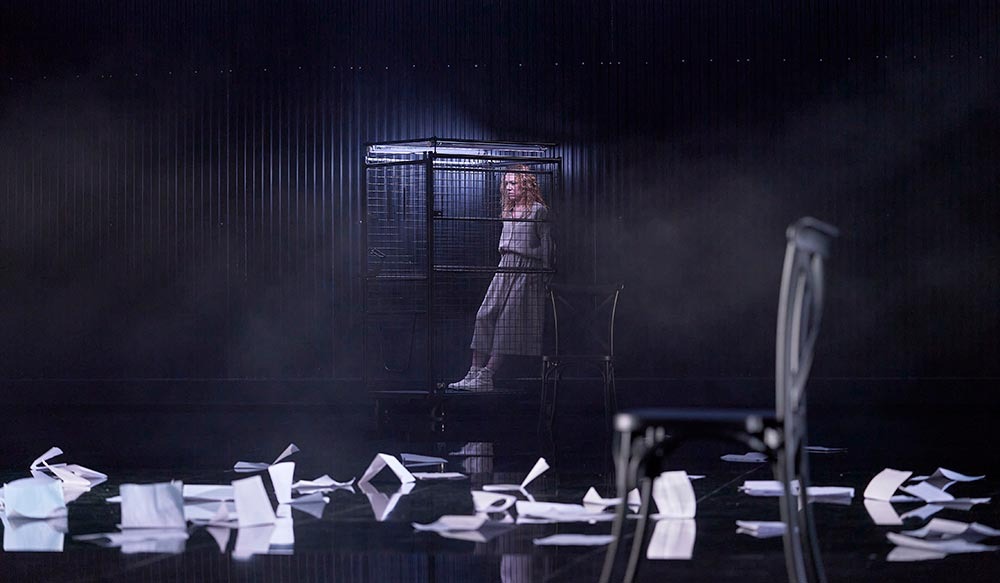
Facing a work like Terra baixa by Guimerà is an enormous challenge. Guimerà writes very well. The scenes reach like a precise arrow to the center of our hearts. However, a lot has happened since the author presented the work to the public of Barcelona in 1896. In order to reach the level that Guimerà demands, we must make a version from the 21st century that can put it where it deserves, outside of the customs and complacency towards the bourgeoisie that turned it into a rural drama despite being something else.
Heritage is an essential asset for the memory of a group and it is very important to recover it. We are memory. But theatre is a living art, and for heritage to have the value it deserves, it must represent us in some way, it must speak about us, and we can only achieve this by reading it from who we are today, in my case a woman of the 21st century, and with the utmost respect for the piece. And that is what we do. We make Terra baixa, we make it from the top down, but from ourselves, from the vision that the time that has passed since then has granted us with revolutions such as feminism, wars, the arrival of fascism in Europe, the Russian Revolution or the Tragic Week.
And in the middle of all this, a small story in a town that lives with its back to progress, where the future passes without stopping, where the feudal heir has already lost everything but clings to his privileges without knowing that it is over. Politics hovers over our heads without us knowing it. This is what happens to Marta, who is not aware of what she is really living until a small thing opens her eyes; and to Manelic… And everyone under a tradition that they find terrible but against which they do not dare to open their mouths and do not even imagine that they could.
Our journalist, a real war correspondent, with her conscience, will explain to us what “really” happened there, at Mas Bordís, in a time that precedes our recent history and our present.