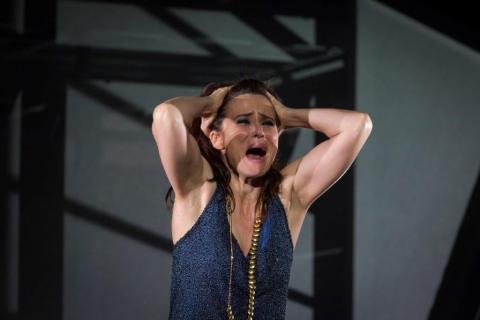
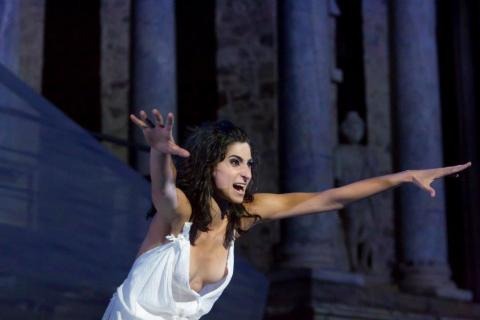
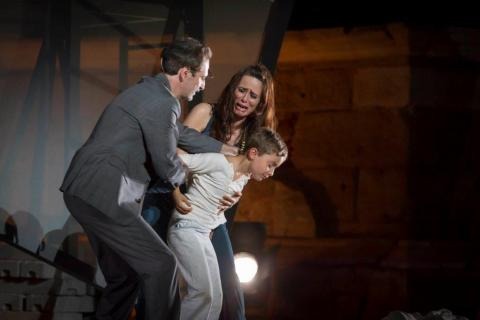
Troyanas
Euripides with the vanquished. After the Trojan War (or any war you can imagine today, yesterday, tomorrow), it seems that everything is over, that the “great action” is over. But then, like the trade when the commercial hours end, the other action begins, the action that is not talked about, the one that is done “by right” with the citizens of “second class”, the one that is not reported in the news: the distribution of women as “sexual” slaves, or slaves of any other type.
Hecuba, Políxena, Cassandra, Andrómache, Briseis, Helena, those numbers… or other numbers… they will be fought over to do more damage to the vanquished, to end a country, a culture. Taltibio remembers it since today, because he has never been able to forget it since he was there, because that “wildness” has stayed inside him for the rest of his life, it has not let him live… or die. That’s why he needs to tell us every night, to get rid of that memory that deprives him of the humanity that a person must have.
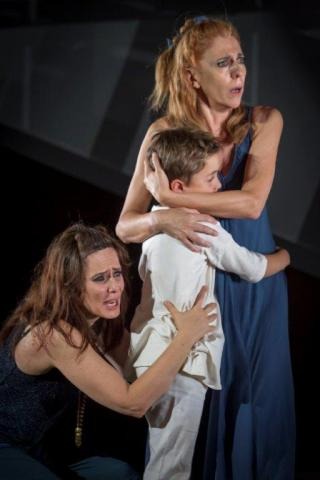
Hécuba fights for dignity, for hers and for everyone’s… because every word and every destiny of the women who are waiting for what will happen to them, produces a frontal clash against the law, against democracy, which is what she defends by defending her rights.