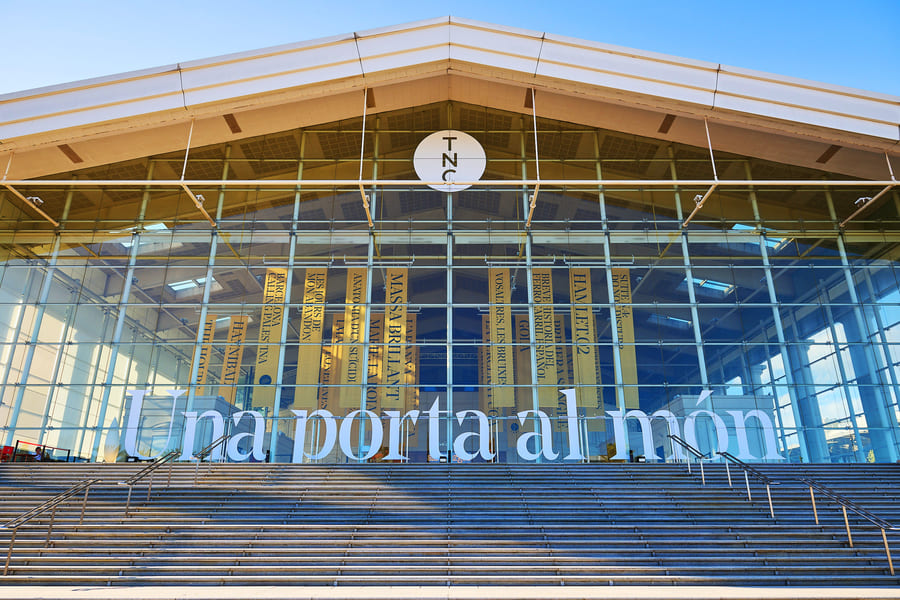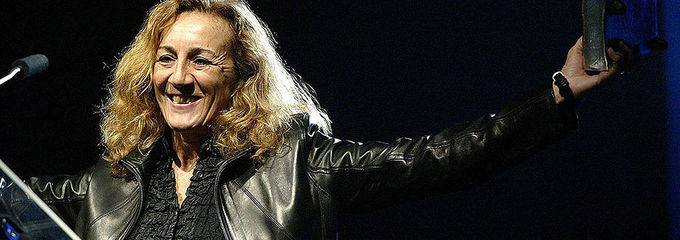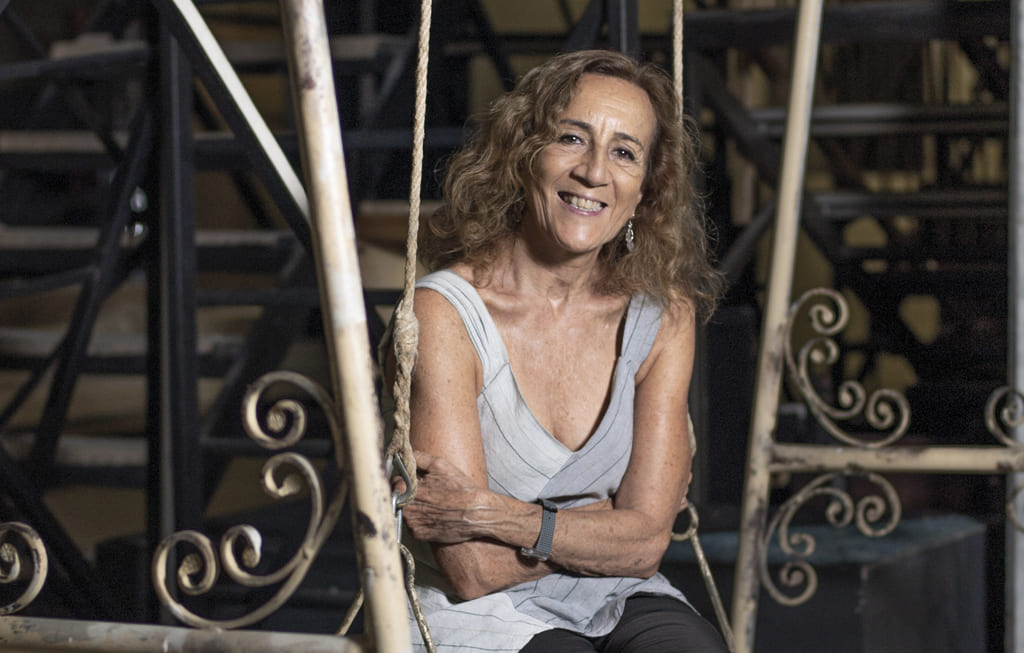
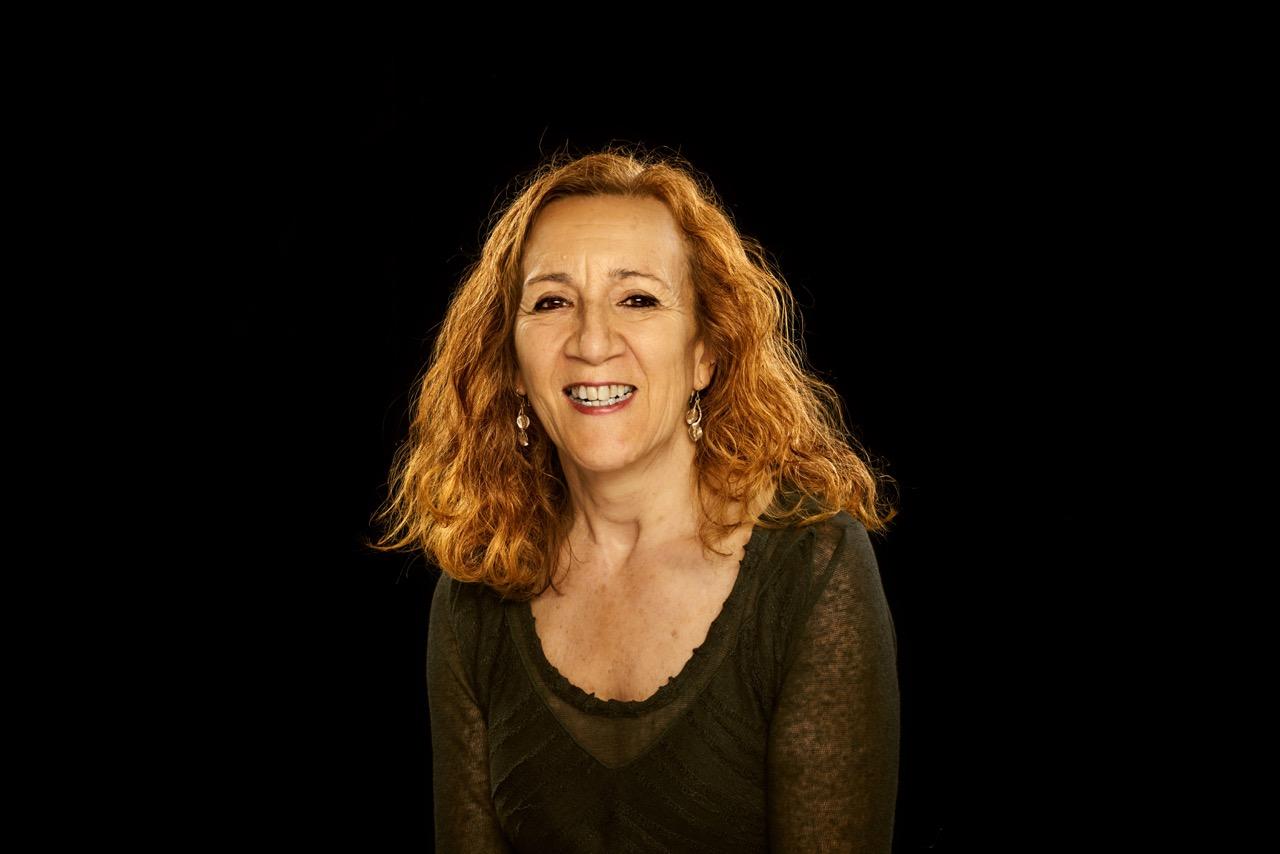
Carme Portaceli is experiencing a successful moment. She has just premiered El president by Thomas Bernhard at the TNC, and the Teatre Lliure de Gràcia is staging Krum by Israeli playwright Hanoch Levin, directed by her. Portaceli works with some of the country’s best actors, and her name has become a seal of quality. Since the early 1980s, she has been tirelessly directing, teaching at the Institut del Teatre, and conducting workshops. She is the founder and director of FEI (Factoria Escènica Internacional).
She has also been a playwright, winning the Max Award for Best Playwright with Fairy. Her theatrical career includes works memorable to many, such as Cara de foc, L’auca del senyor Esteve, Ricard II, La nostra classe, and Les dues bandoleres by Lope de Vega.
Interview Highlights:
searching how to convey what you want and knowing you have a great responsibility with what you are telling and what you are saying. I love working with actors and being able to make what happens alive at that very moment on the stage.
At the moment of its birth it was very well received by the profession, by the public, and by critics. Then things changed, economic aid did not come as at the beginning, although it was never large, but it gave us security to think about the future and to plan.
Nau Ivanow became a creation factory and we were left outside. Despite the very hard moments of crisis we have lived together, we have survived, we keep working, we constantly co-produce with Public Theatres, with Festivals, in Barcelona, Madrid… I liked it better when we were all together and we had a space. I believe that having a space is your freedom.
Everything on a stage has to mean something; nothing should be there just for the sake of it. For me, the text, movement, sound space, the stage space, lighting, costumes — everything has to serve to tell the story.
In the case of these two plays, we are talking about the lives of people who could have been any of us. The weight of history, of politics, hovers subtly (sometimes not so subtly) over their heads, and they do what they can with the circumstances they have been dealt. Gorky, due to his era and tradition, I believe is more pessimistic.
M.B: The protagonist of the play is Krum, a character played by Pere Arquillué. However, Krum ends up being a spectator of a whole gallery of lives that appear on stage like a diorama. The text doesn’t follow a classical structure of setup, conflict, and resolution, but rather a sequence of scenes that give the play a choral dimension. Your movement assistant, Ferran Carvajal, who also assisted you at the TNC with El president, must have been key. How did he work with the actors’ movement and the transitions between scenes?
C.P: Movement is extremely important to me. When I direct, I’m very physical because I believe the body is part of what is happening inside, and it must also signify what is happening inside. It’s not about creating archetypes of characters; it’s about raising expression one degree, raising the diaphragm one more degree, knowing we are doing theatre, not television. The text has to have a truth in the superlative degree, and the excellence of the acting work must be total. And the rigor with which you must work is even more demanding when you take on a more abstract and expressive approach. In Krum there are practically no transitions because life unfolds this way, simultaneously, without permission, without turns.
The intention to create chaos, obviously super-organized and precise, was clear to me from the start. And in this sense, we worked with Ferran, indeed a key piece. He is also very precise, and we understand each other very well. The rehearsals of the entire company, of the whole neighborhood where Costra lives, signify this walk through life searching for a way forward with the background of the song Vedras Vedras by Luigi Tenco, which Jordi Collet found, a key piece in my productions, to express this hope that one day everything will be different.
In El president there is a very different structure, and my obsession that everything elemental on stage is shown openly means that changes happen simultaneously: technicians doing their work and actors preparing for the next scene. And this has to be organic, very precise, and well done. And with a soundtrack, also by Jordi Collet, that accompanies the atmosphere the play needs.
Text extracted from the NUVOL portal